
Method: This guide combines current public venue/vendor sources, local directory evidence and editorial judgment. Mobile schedules remain volatile; confirm directly before traveling.
Begin with service fit, not a generic price
A truck that serves walk-up customers is not automatically equipped for a 200-person private event. Ask whether the vendor accepts private bookings, the minimum guest count, service radius, booking lead time and whether they can serve your required window. Never infer catering availability from a directory category alone.
Build a useful inquiry
Include the date, service address, estimated guest count, serving window, event type, available parking footprint, power and water access, and whether the event is indoors or outdoors. Mention dietary needs as questions rather than promises. The vendor needs enough information to estimate prep, staffing and travel.
Plan throughput
One complex made-to-order menu can create a long line. Ask how many guests the truck can serve per hour and whether a limited event menu would improve throughput. For a mixed office lunch, a shorter menu with a vegetarian option can be more useful than offering every regular item.
Site and weather constraints
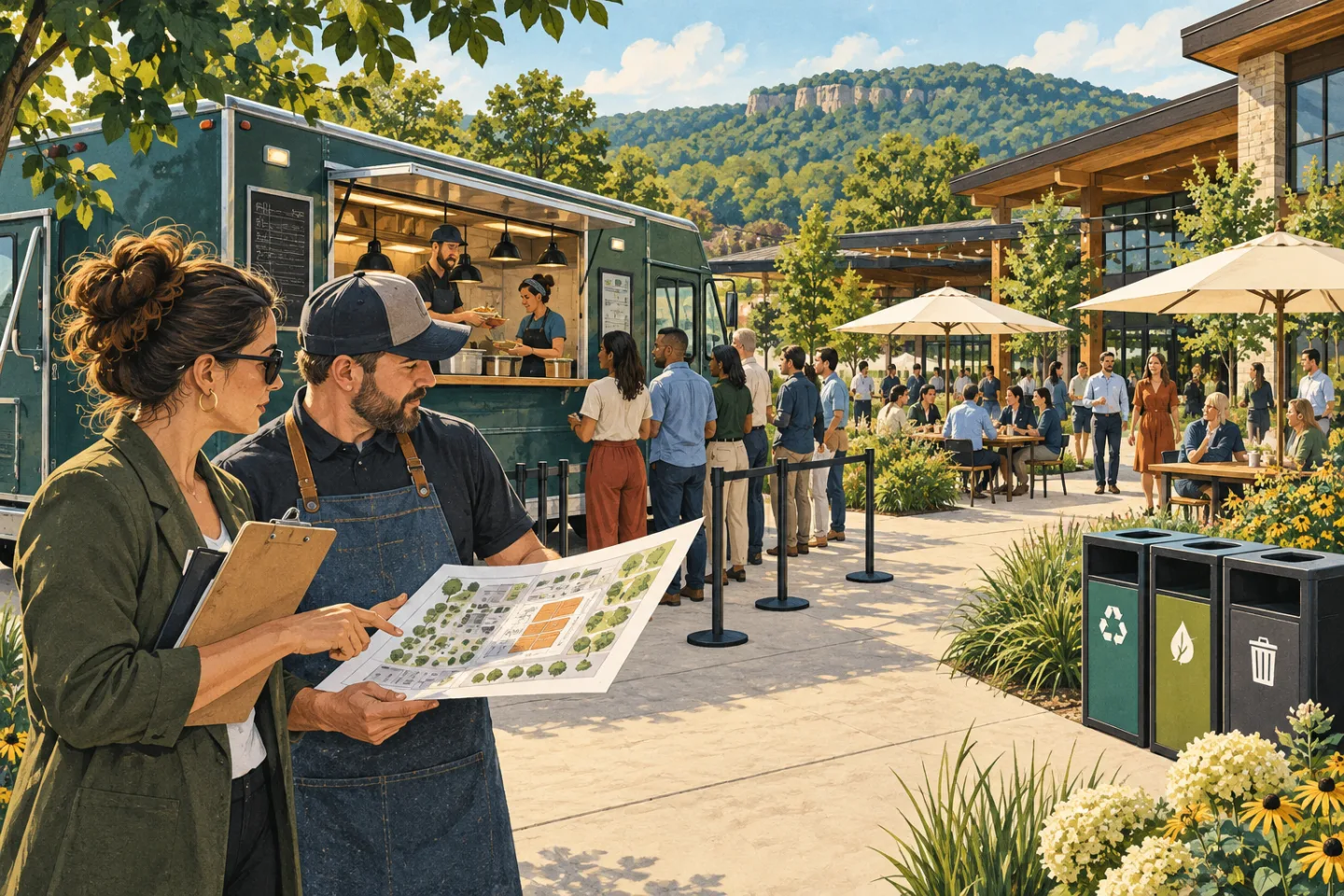
Confirm where the truck can park, whether the surface is level, how guests will queue, and what happens in rain or extreme heat. Ask the property manager about permits, fire lanes and generator restrictions. These details vary by venue; this guide is a planning checklist, not legal approval.
Compare quotes fairly
Check what each quote includes: food, travel, minimum spend, service charge, tax, disposables, drinks, staffing and cancellation terms. The lowest menu price may not be the lowest total. Use the same event brief for every vendor so the comparison is meaningful.
A worked workplace-lunch scenario
For a 90-person weekday lunch, tell vendors that service must fit into a 75-minute window and ask for realistic hourly capacity. A limited menu of two mains plus one clearly described vegetarian choice may move faster than the complete public menu. Confirm where the line will form and whether employees will pay individually or the host will settle one invoice. Those decisions affect staffing and the quote.
Food safety and dietary communication
Ask the vendor how ingredients and allergen questions will be communicated at the event. Do not convert a casual “vegetarian available” note into an allergen-free promise. Provide guests with the vendor’s current ingredient information and a direct question route. The event host should also plan handwashing, waste collection and safe queue placement with the venue and vendor rather than relying on a generic online checklist.
Contract and cancellation details
Before paying a deposit, identify the contracting party, payment schedule, refund conditions, weather plan, minimum spend and what happens if the truck has a mechanical problem. Confirm whether the quote includes sales tax, travel and service charges. Keep the final menu and service window in writing. This guide helps organize questions; the vendor’s written agreement controls the actual booking.
Final review before the event
One week before service, reconfirm the guest estimate, arrival time, exact parking position, site contact and final menu. Share a simple arrival map that keeps the truck out of fire lanes and away from low branches or tight turns. Tell guests when service begins and how dietary questions will be handled. On the day, reserve setup time and keep one person available to coordinate with the vendor. Afterward, compare actual throughput and leftover demand with the original estimate; that concrete record is more useful for a future event than a generic star rating.
Source and freshness note
Truck and venue information can change faster than an editorial guide. We record the review date, prefer a business or host venue’s dated first-party announcement, and use local organizations or regional publications as corroboration rather than pretending they are live feeds. A source link confirms what was publicly available when reviewed; it does not guarantee today’s service. When reliable sources conflict, we remove unsupported precision and explain the uncertainty. Readers and business owners can submit a correction with the affected URL and newer evidence. An editor reviews the source before changing the public record, which protects both visitors and vendors from automatic or bad-faith edits.
What to do next
Open the NWA directory, choose a city, then follow the source shown on the individual profile. If you find a changed address or closed business, use our correction form so an editor can review the evidence.